
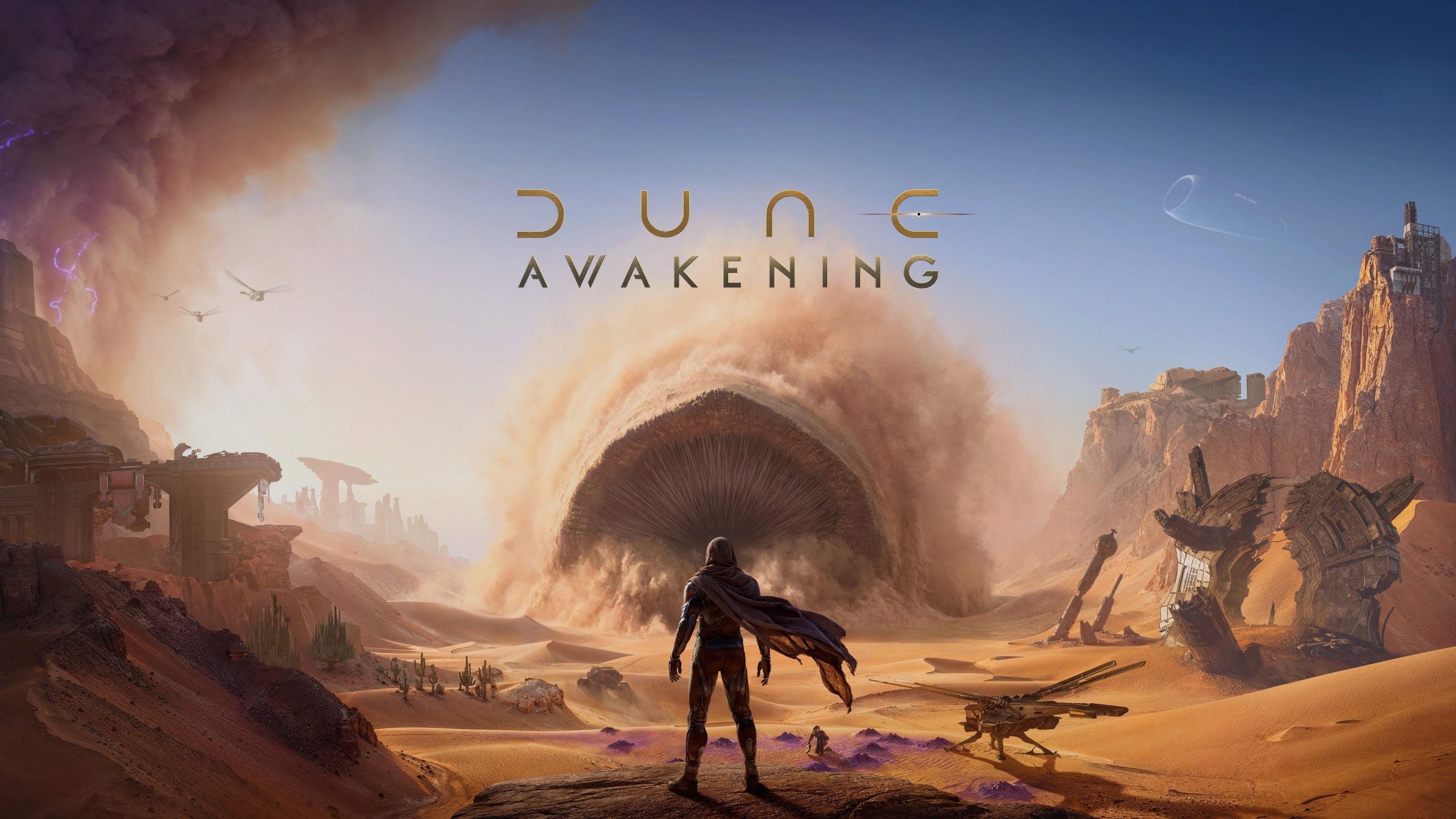
Arrakis has waited a long time for a game that lets players live inside its dunes rather than just watch them from a cinema seat. Dune: Awakening arrives on PlayStation 5 as Funcom’s attempt to turn Frank Herbert’s desert into a place you can survive, build, and fight over.
Story
In Dune: Awakening, the campaign is built on a single provocative question: what if Paul Atreides had never been born? You arrive on Arrakis as a custom agent shaped by homeworld, background, and mentor, sent to find the Fremen and wake the Sleeper. That premise lets Funcom keep the politics, religion, and ecology of the books while writing a new path through the Imperium. Faction storylines for House Atreides and House Harkonnen run alongside the main thread, and the console release includes the completed Book One finale so the narrative now has a beginning, middle, and end.

The writing is strongest when it treats survival as plot. Water, spice, and shelter are not just meters; they are reasons characters lie, bargain, and disappear. Cinematic sequences and mentor abilities give the story texture, but the pacing still bends around crafting and travel. Some players will feel the lore is the reward. Others will notice that the grand space opera sometimes waits while you farm cobalt paste. Either way, the alternate timeline is coherent enough that the world feels like Dune even when the script is serving the loop.
Graphics
The PlayStation 5 version presents Arrakis in two clear modes: Performance targeting 60fps at dynamic 4K, and Quality targeting 30fps at the same resolution. On a standard PS5 the image is sharp enough to sell the scale of the dunes, the heat haze, and the distant rock formations, while the PS5 Pro version adds a higher native resolution and extra visual polish in Quality mode. Lighting and sandstorms do a lot of the heavy lifting, turning midday glare into a genuine threat and making night feel colder and more dangerous.



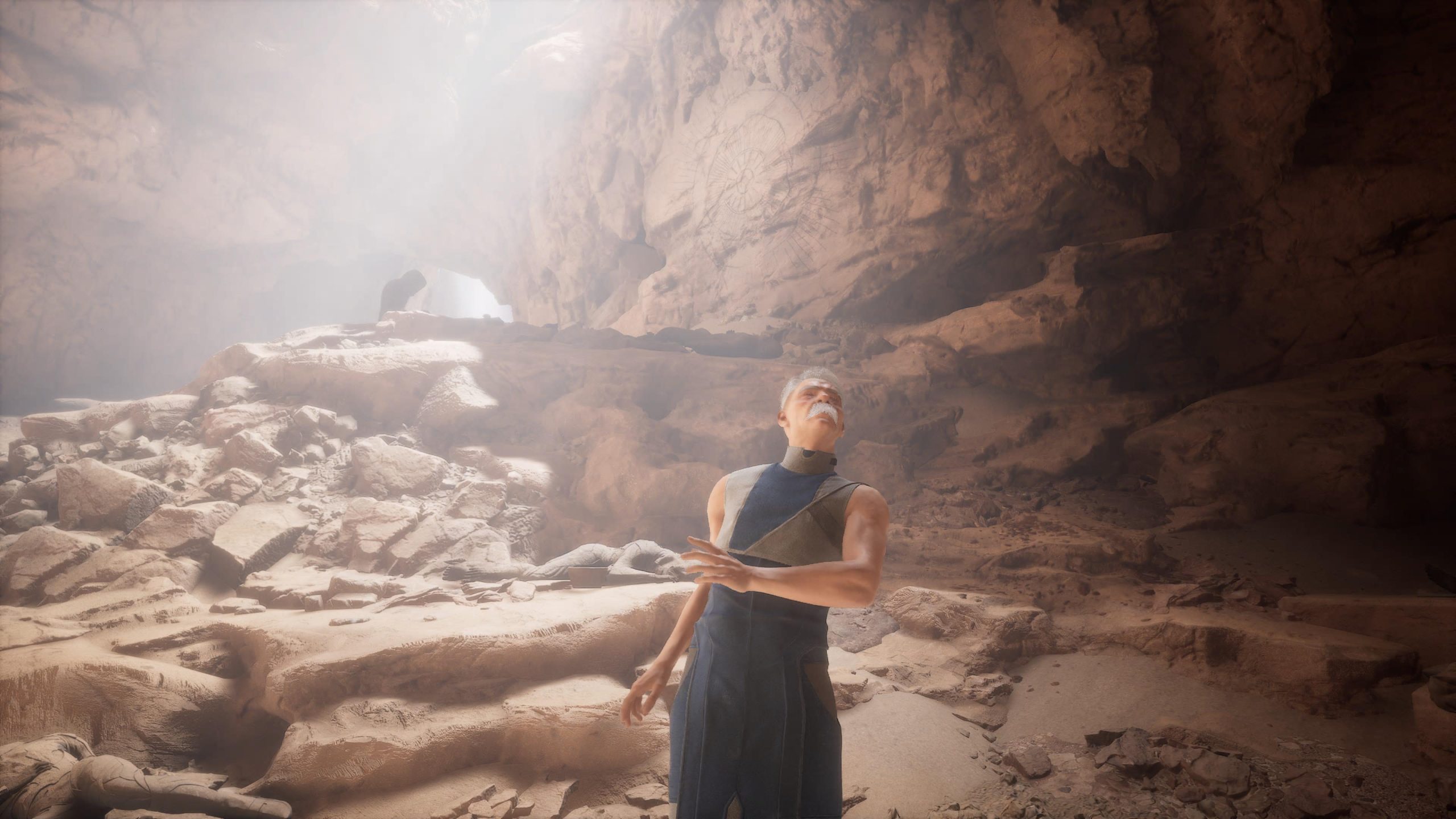
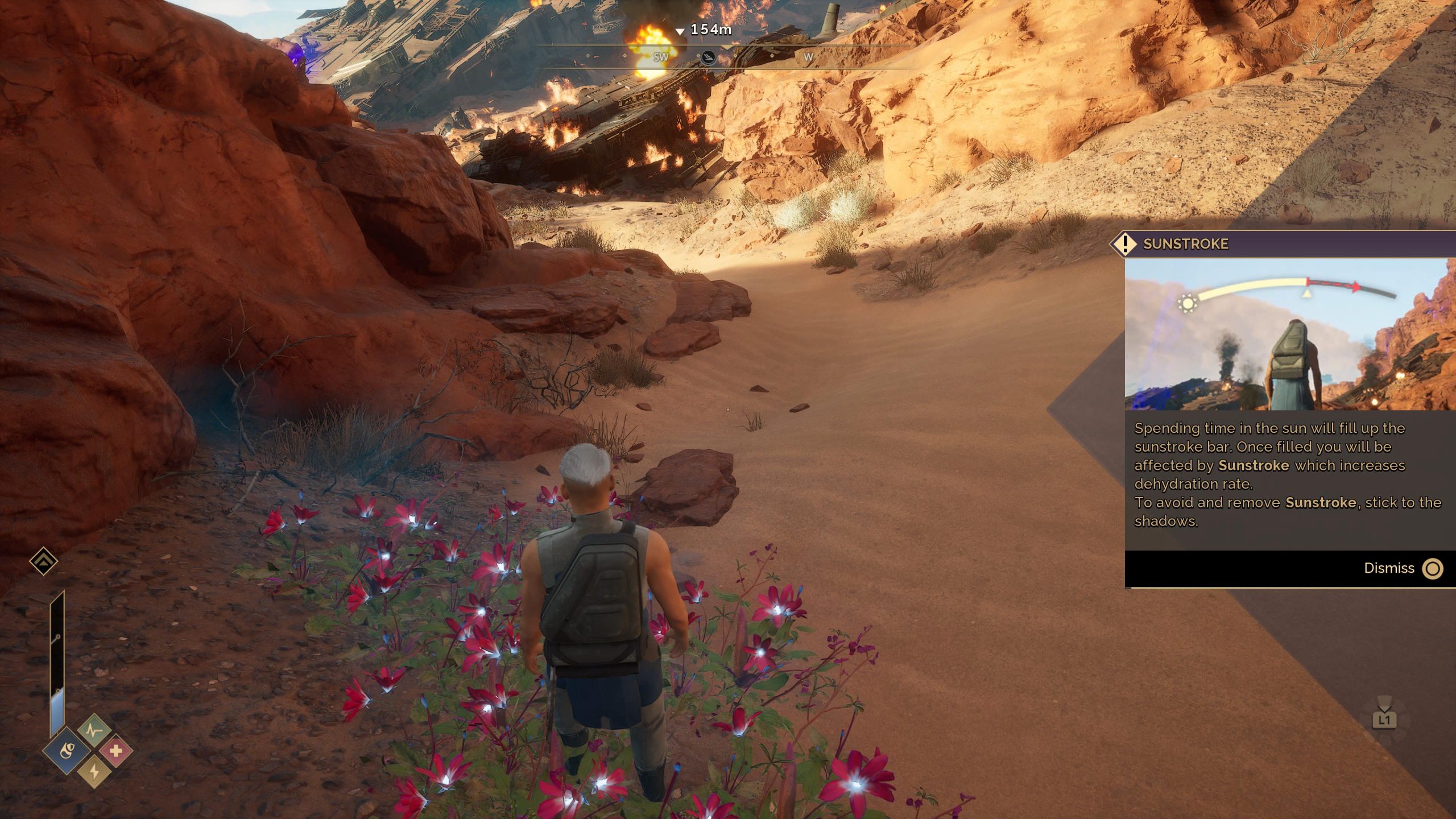
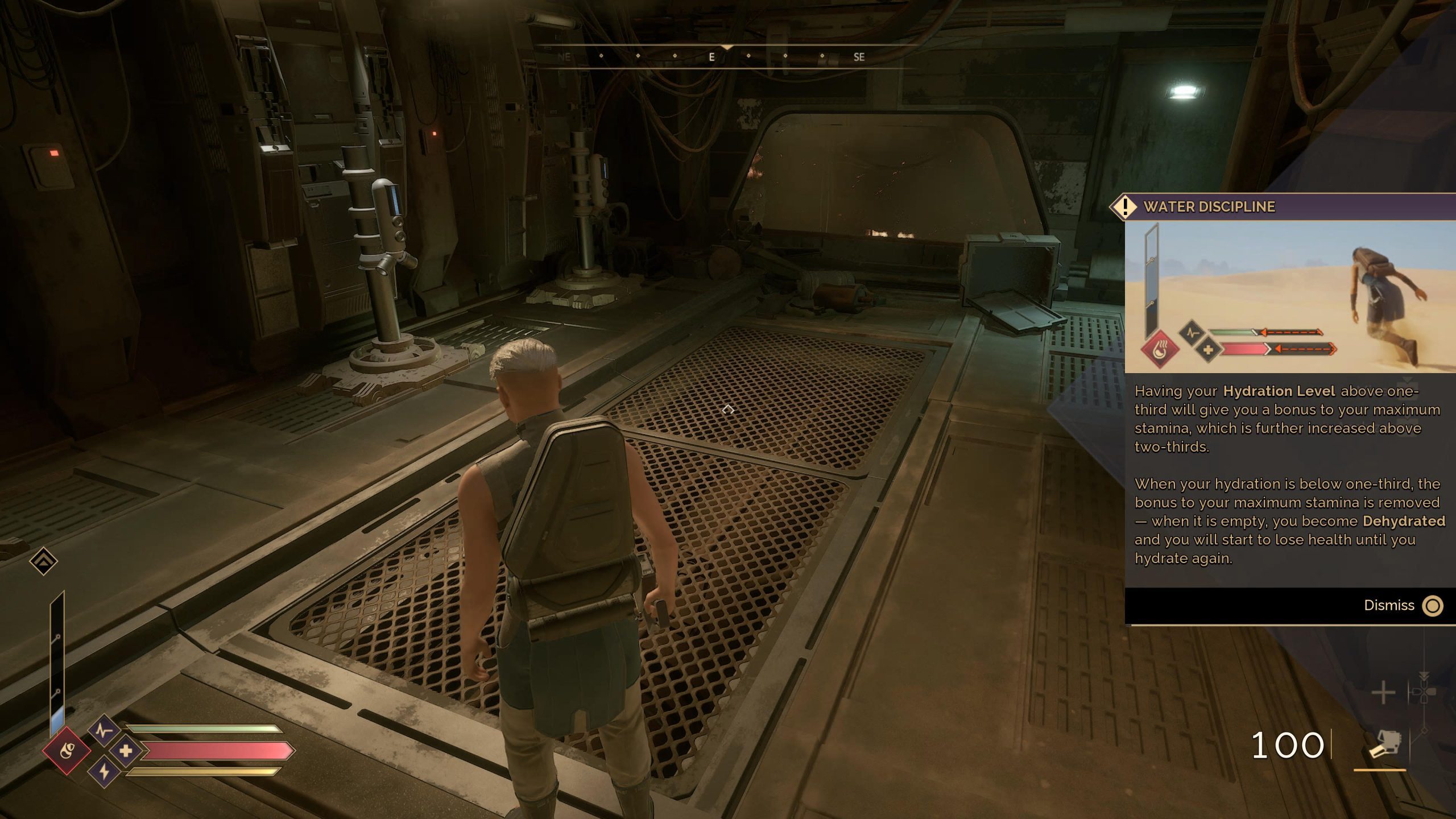
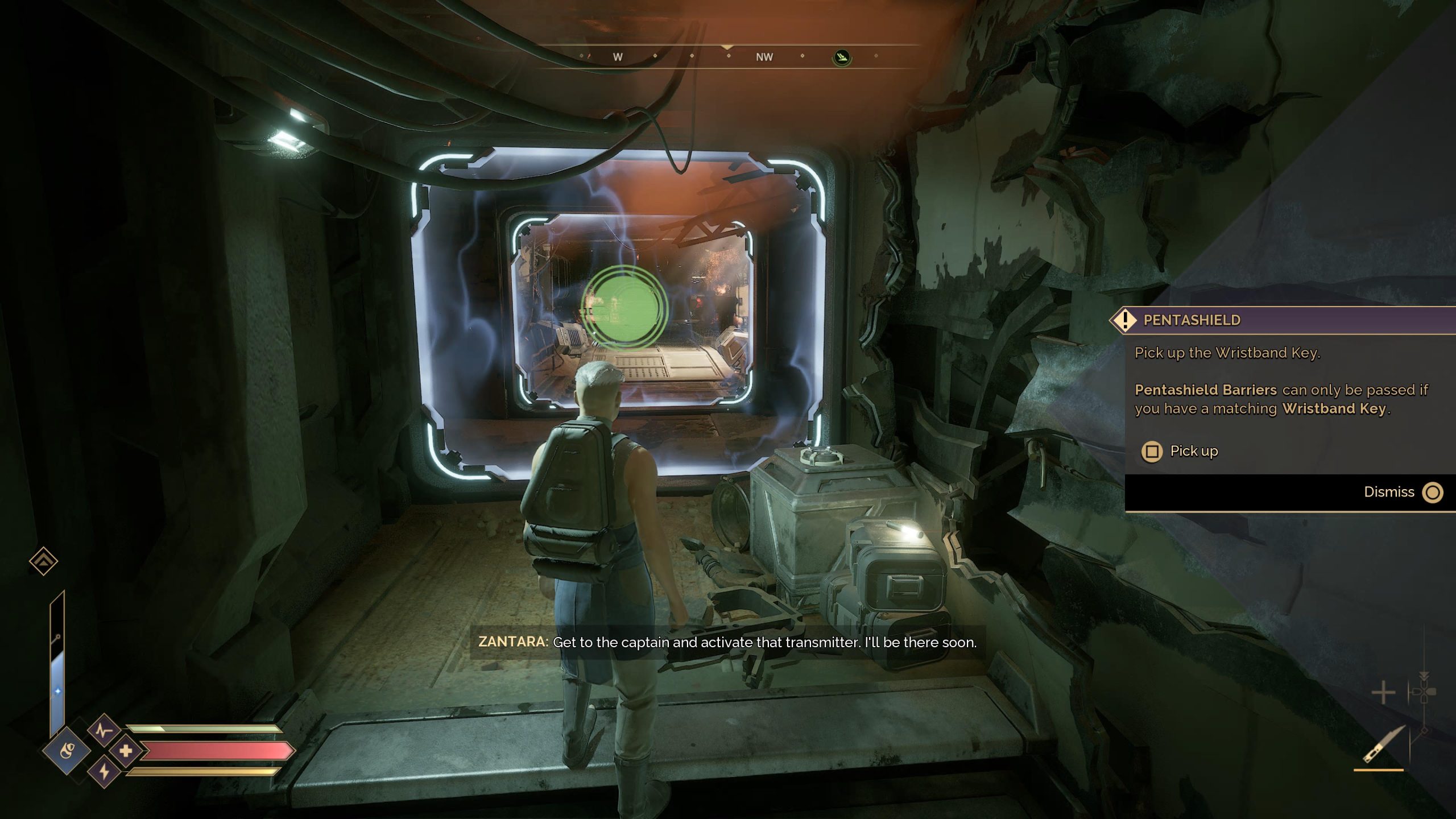
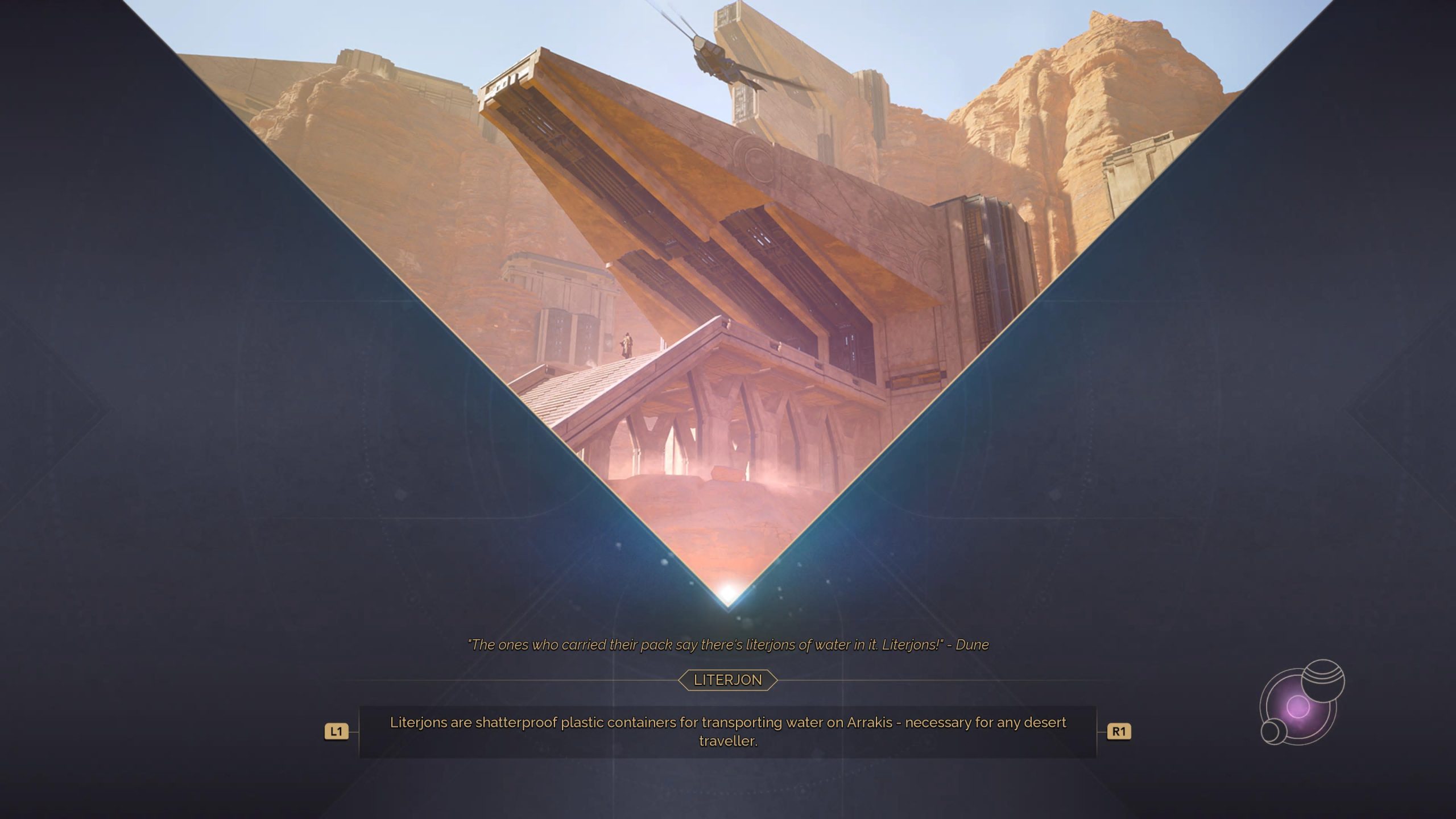
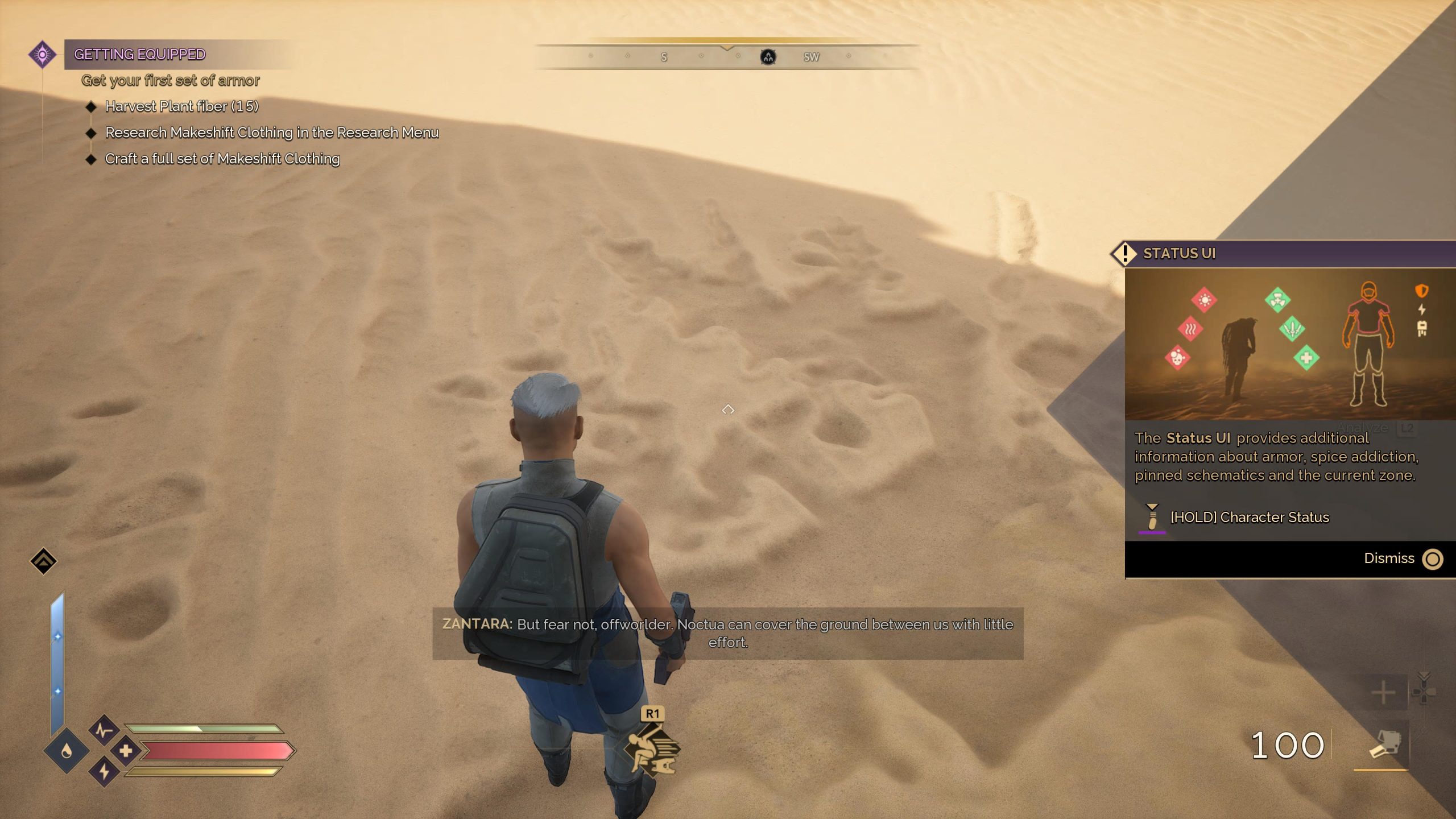
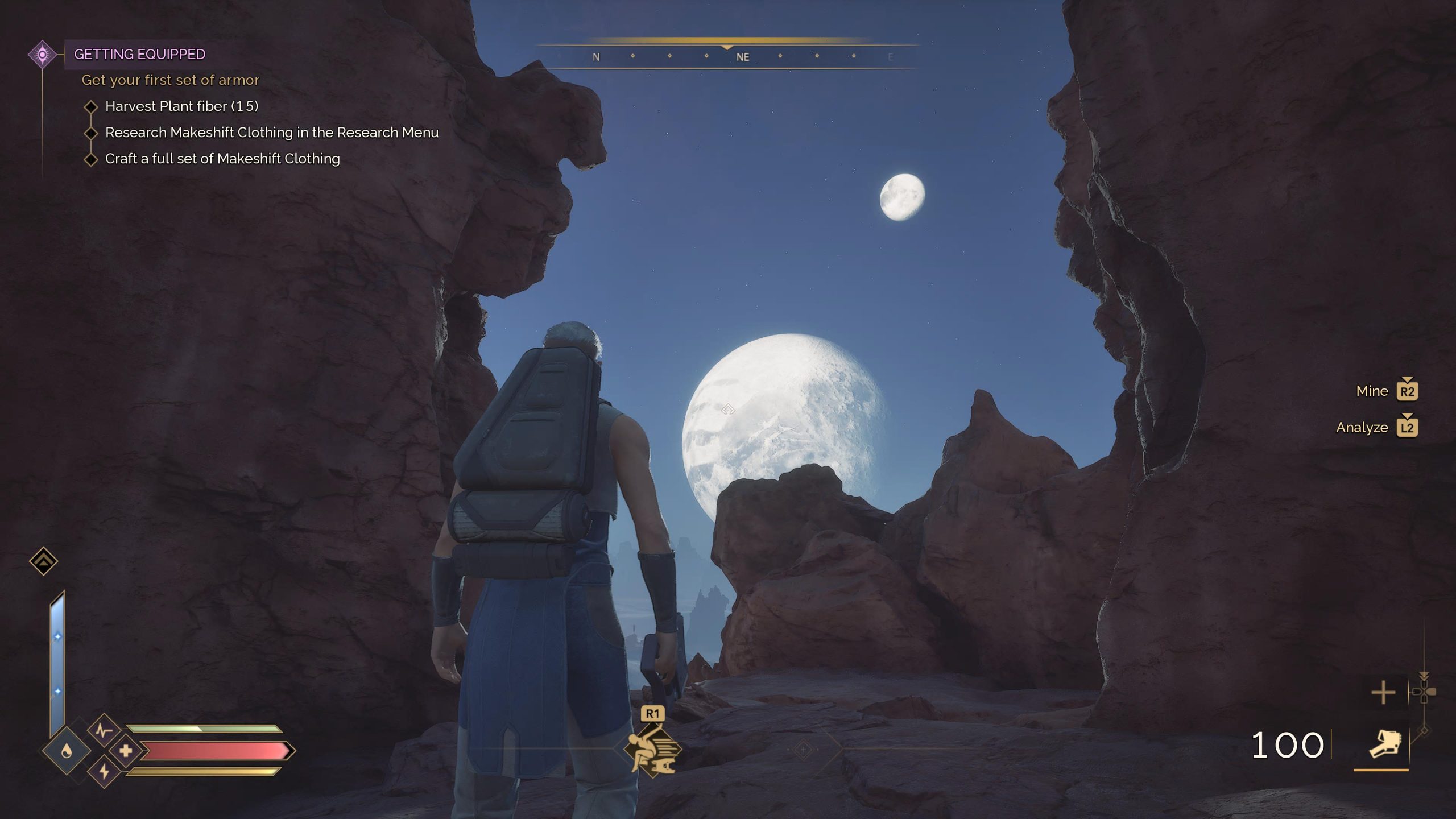
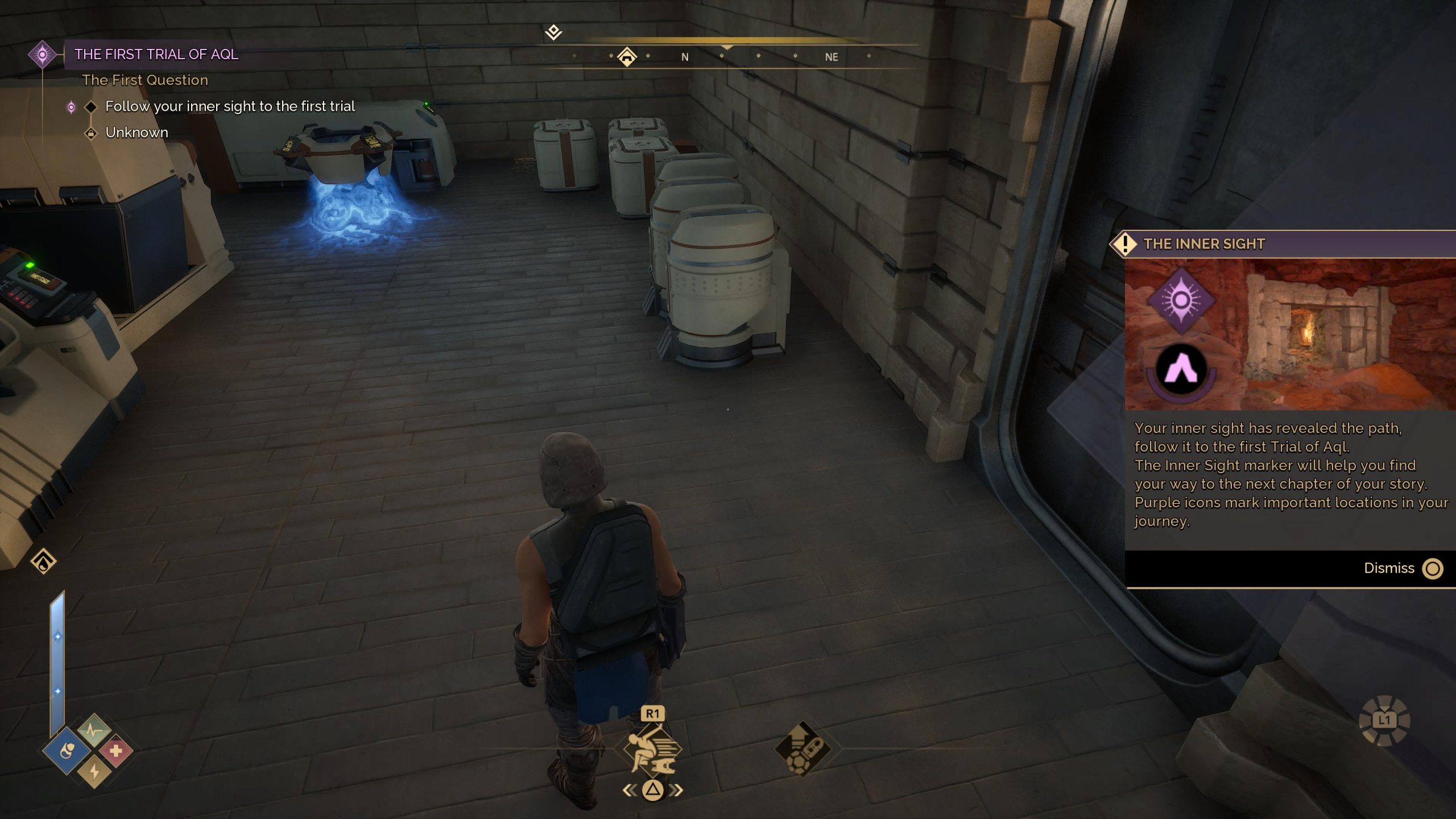
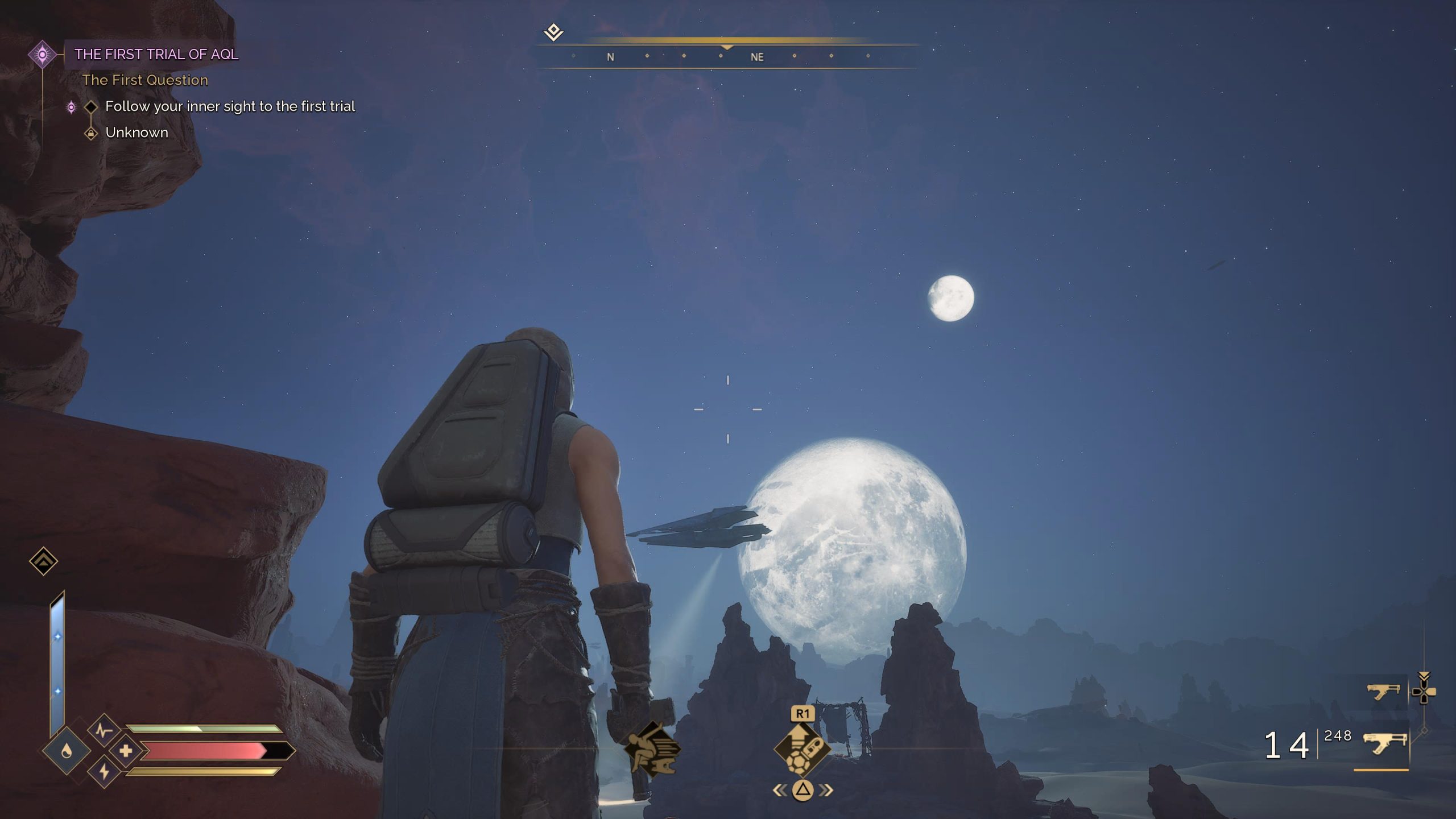
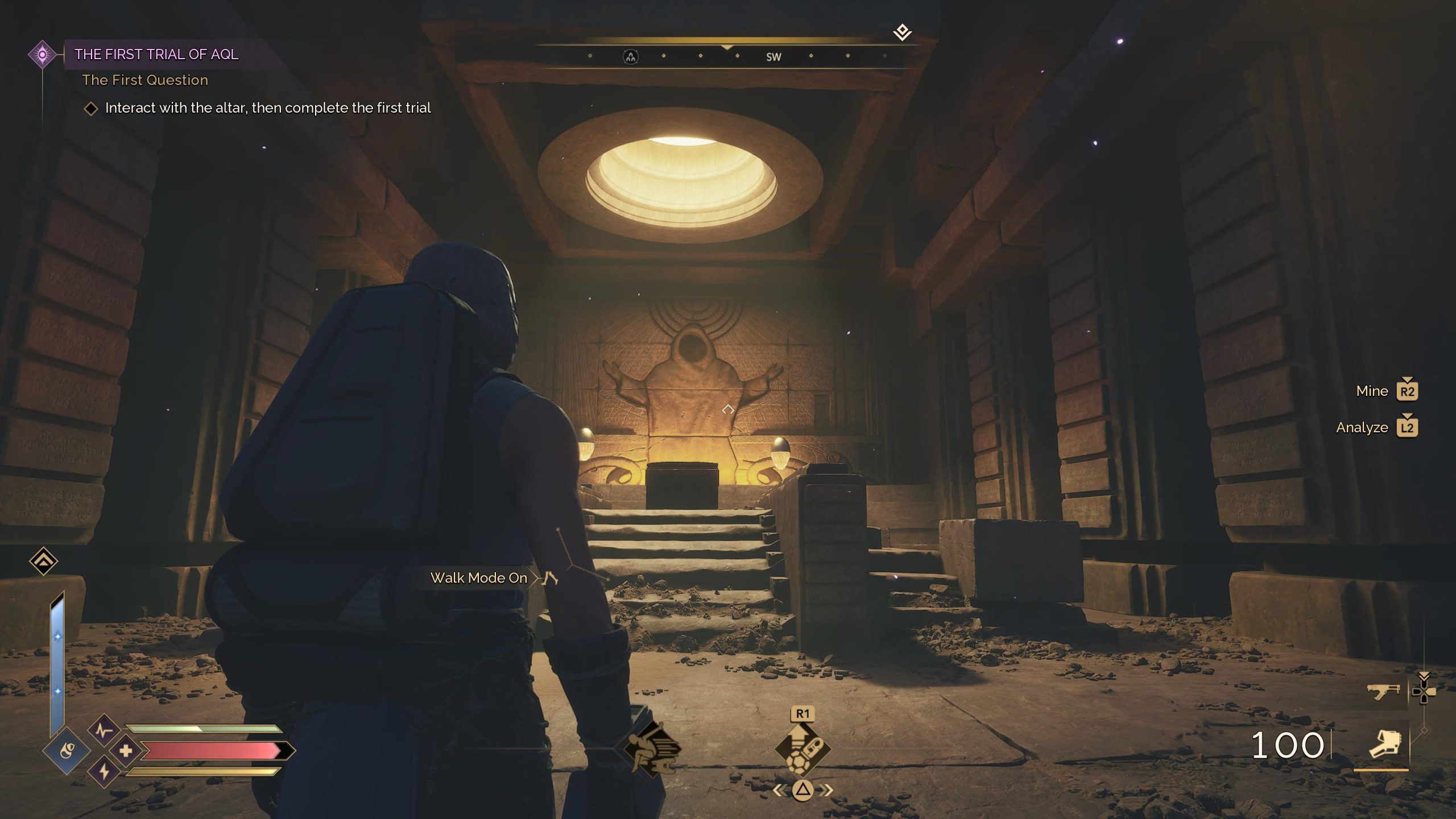
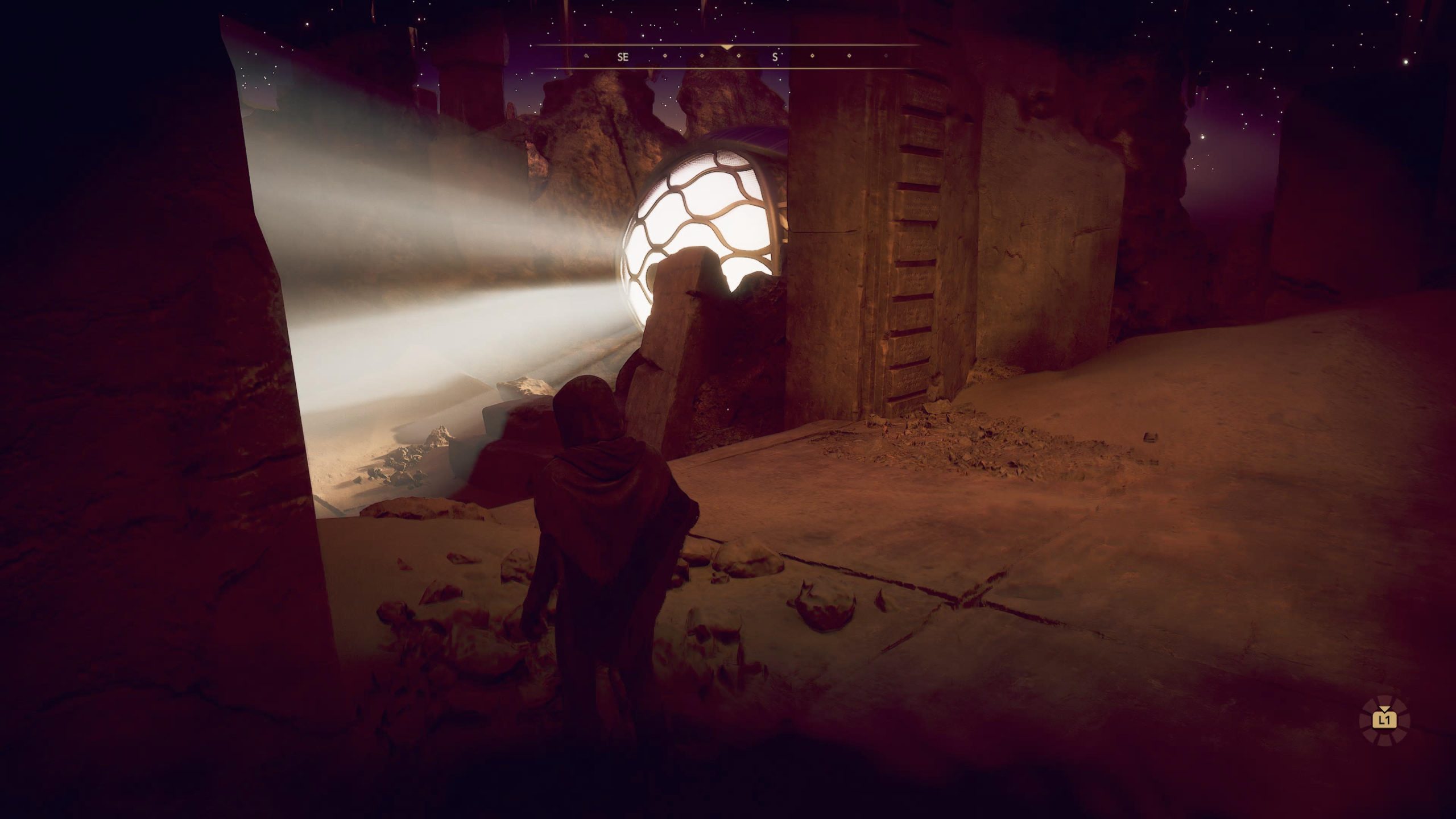
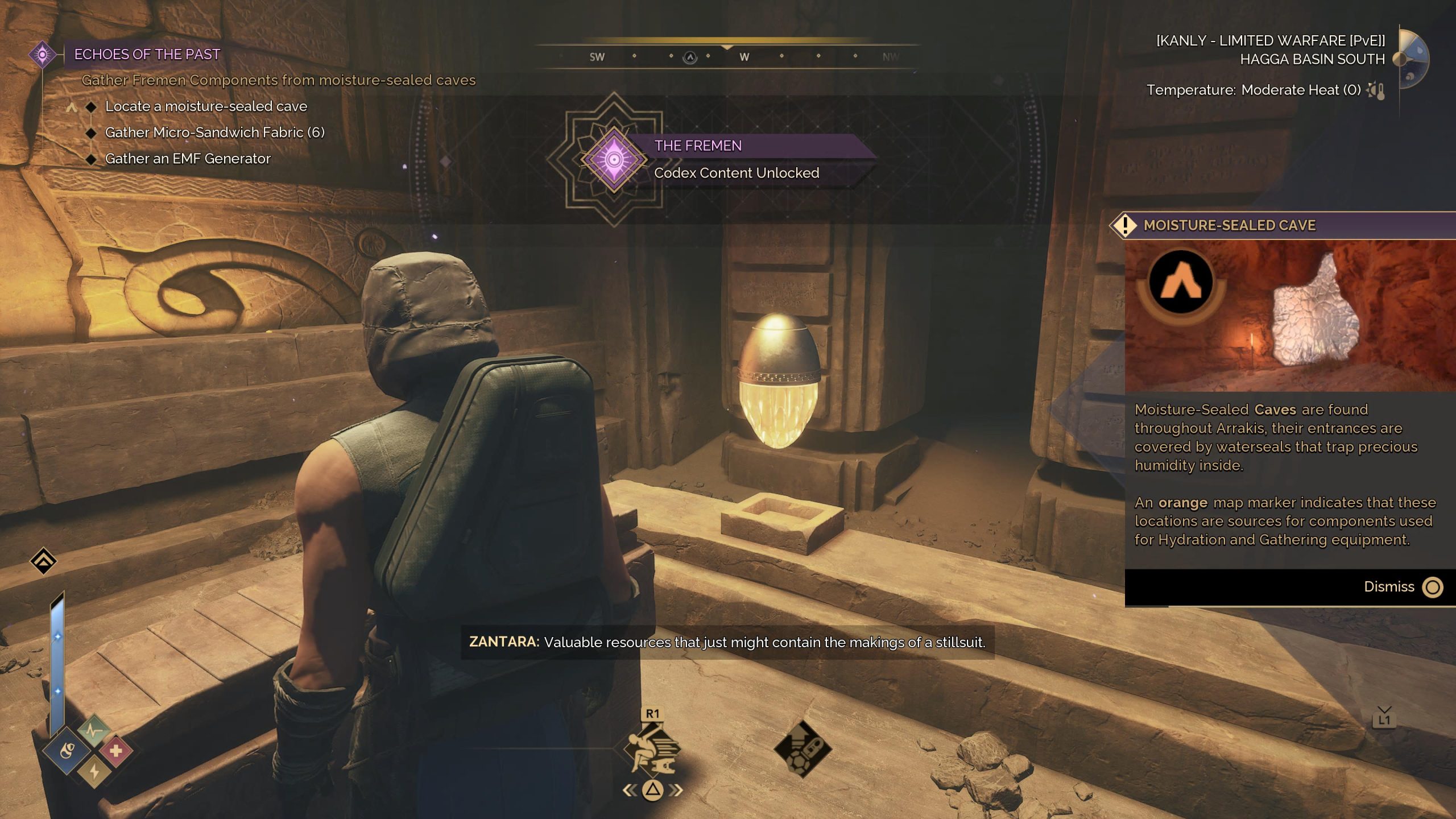
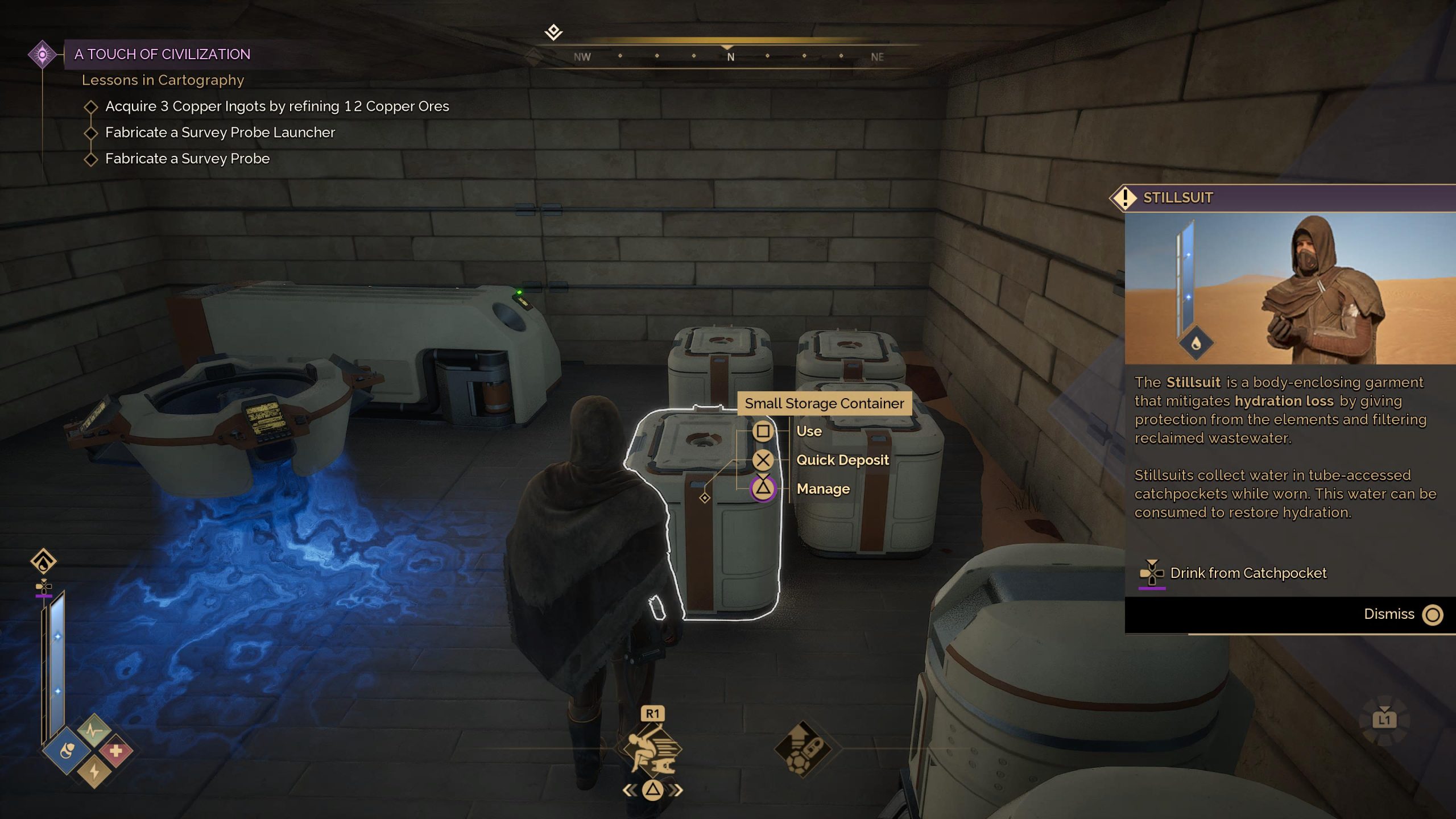
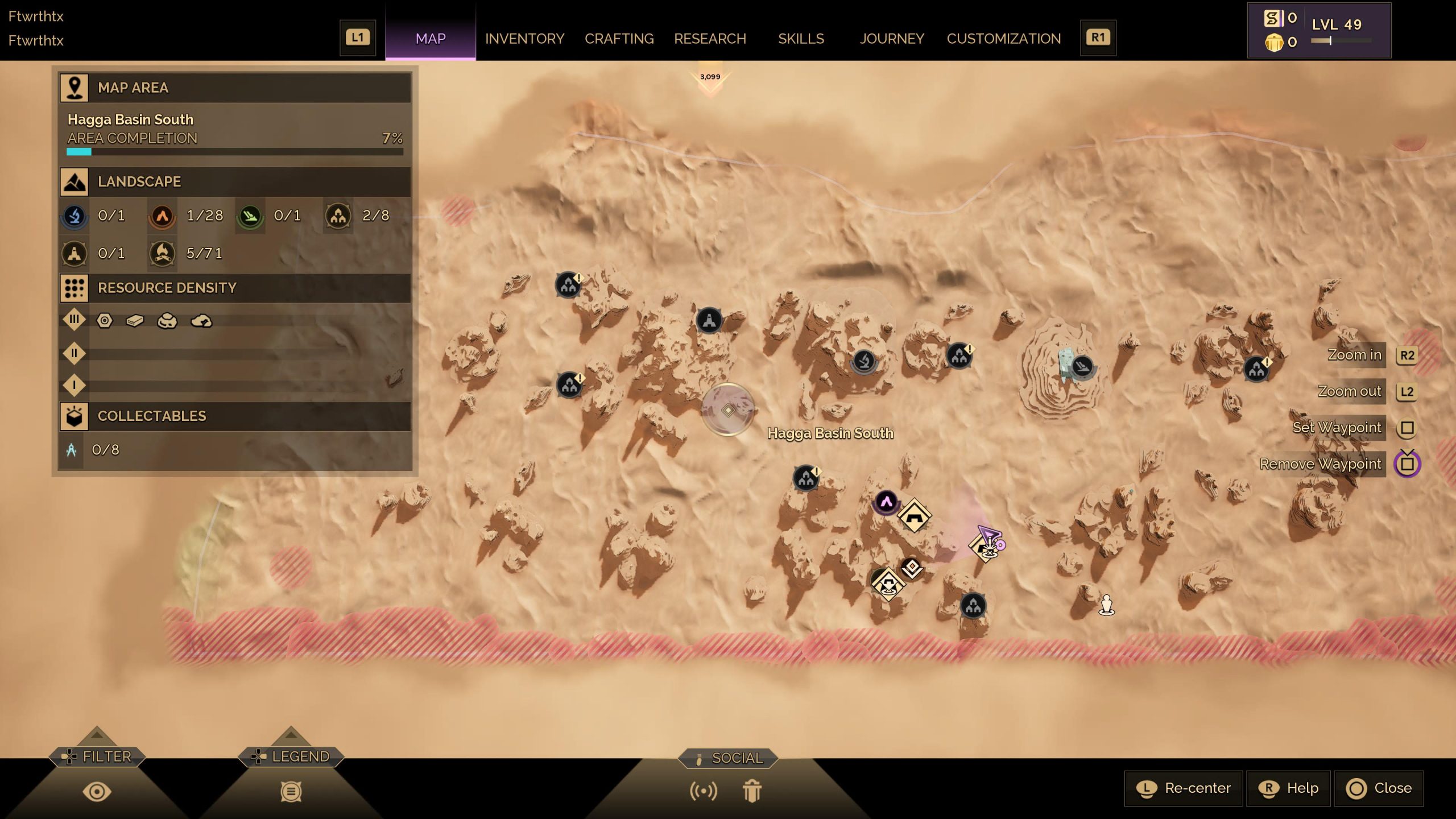
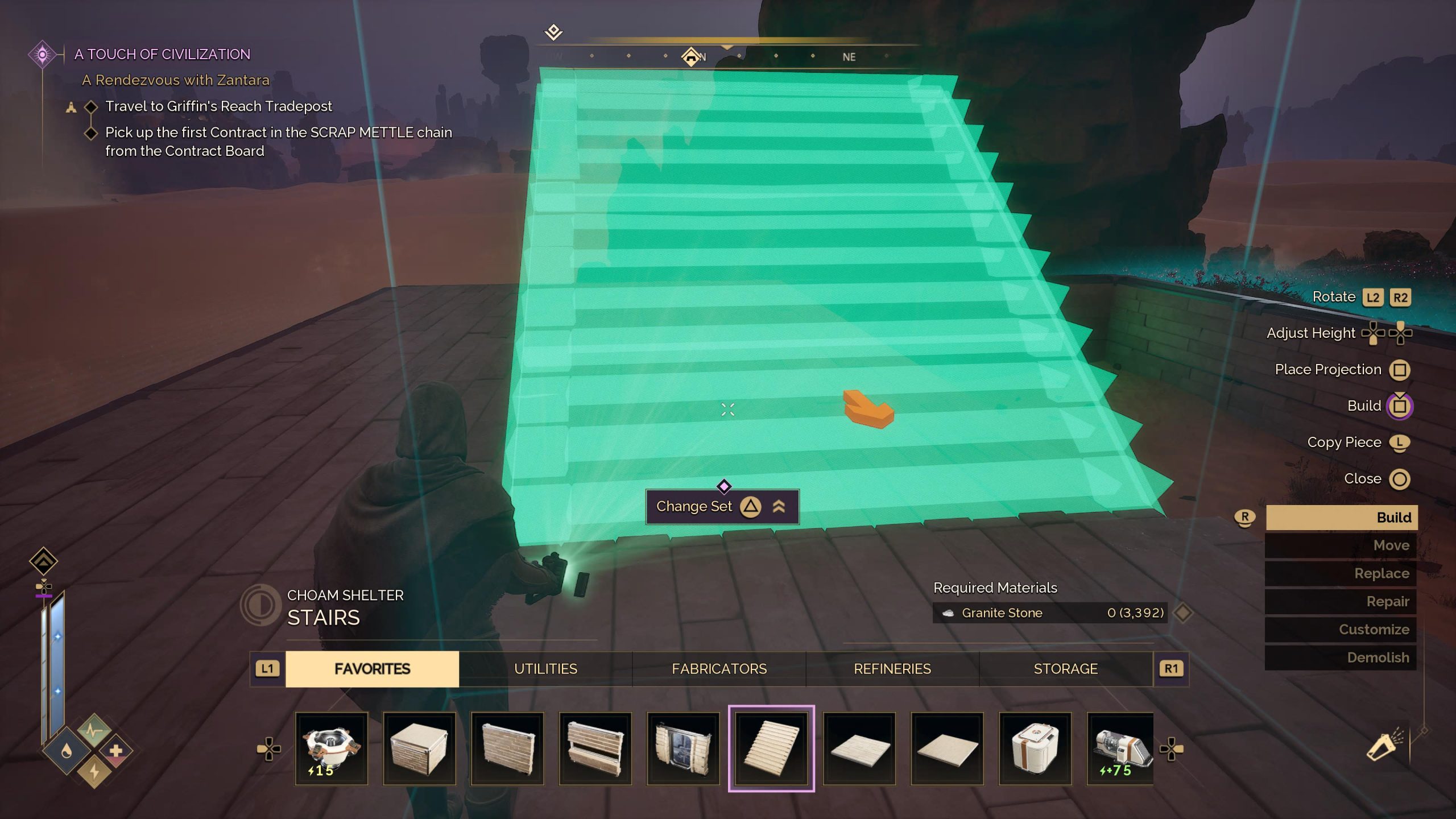
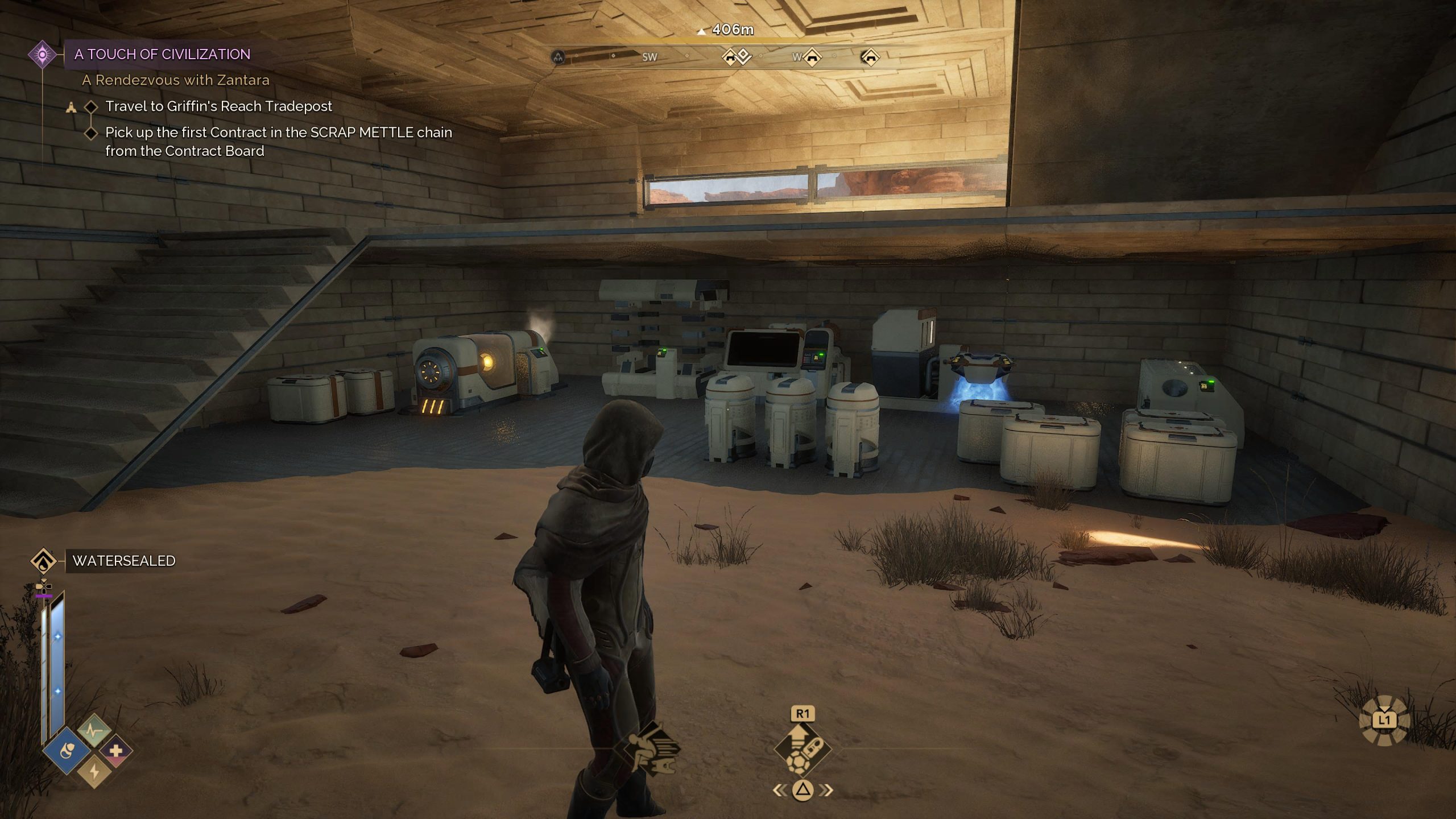
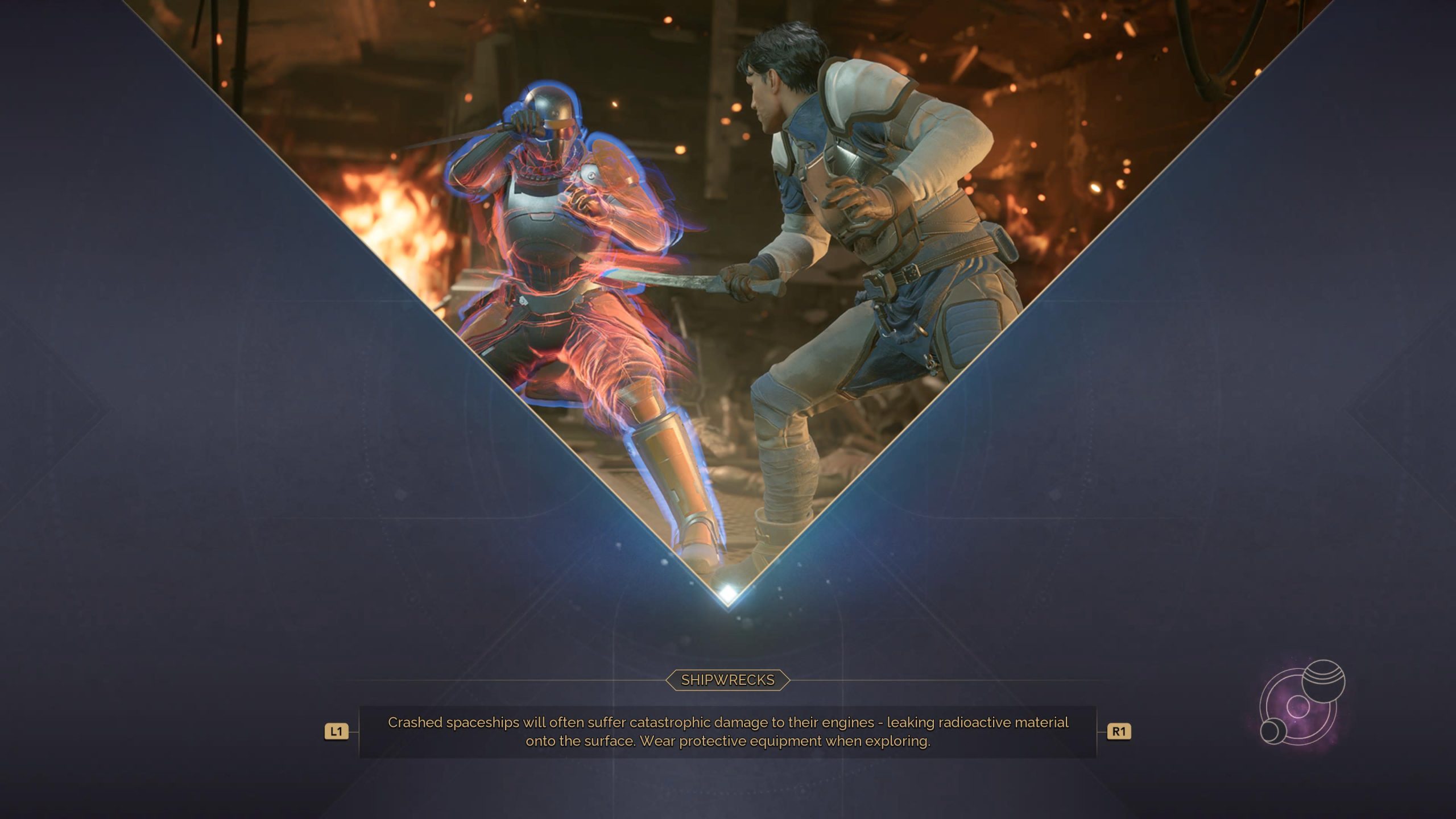
Textures and character models sit a step behind the best Unreal Engine 5 showpieces, especially at distance, but the overall presentation still captures the planet’s hostility. DualSense haptics add a useful layer when you feel the rumble of an approaching worm or the vibration of a sandbike crossing loose dunes. The result is a world that looks imposing on a big screen even if it never quite becomes photorealistic.
Sound
Knut Avenstroup Haugen’s score sits somewhere between the grandeur of the recent films and the more restrained, looping needs of a long survival session. Long string lines and processed acoustic instruments give Arrakis a voice without constantly competing with the environment. The adaptive system keeps the music from becoming repetitive even after dozens of hours in the same basin.
Sound design does the rest of the work. Wind, shifting sand, distant worm calls, and the sudden roar of a storm create tension even when nothing is attacking you. Combat and vehicle audio are functional rather than spectacular, but the mix leaves enough space that you can hear a threat coming across open ground. Silence is used as effectively as noise.
Crafting
Progression is built around a clear loop of scanning, tracing, and assembling. The Cutterray turns resource gathering into a small puzzle instead of mindless swinging, and the jump from hand tools to vehicle-mounted versions feels like a real expansion of what you can do in a session. Stillsuits, shields, refineries, and base machines all feed into the same system, so every new schematic changes how you move through the world.
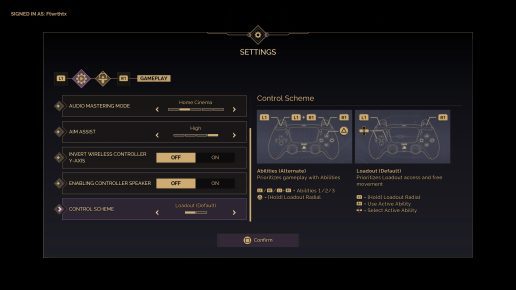
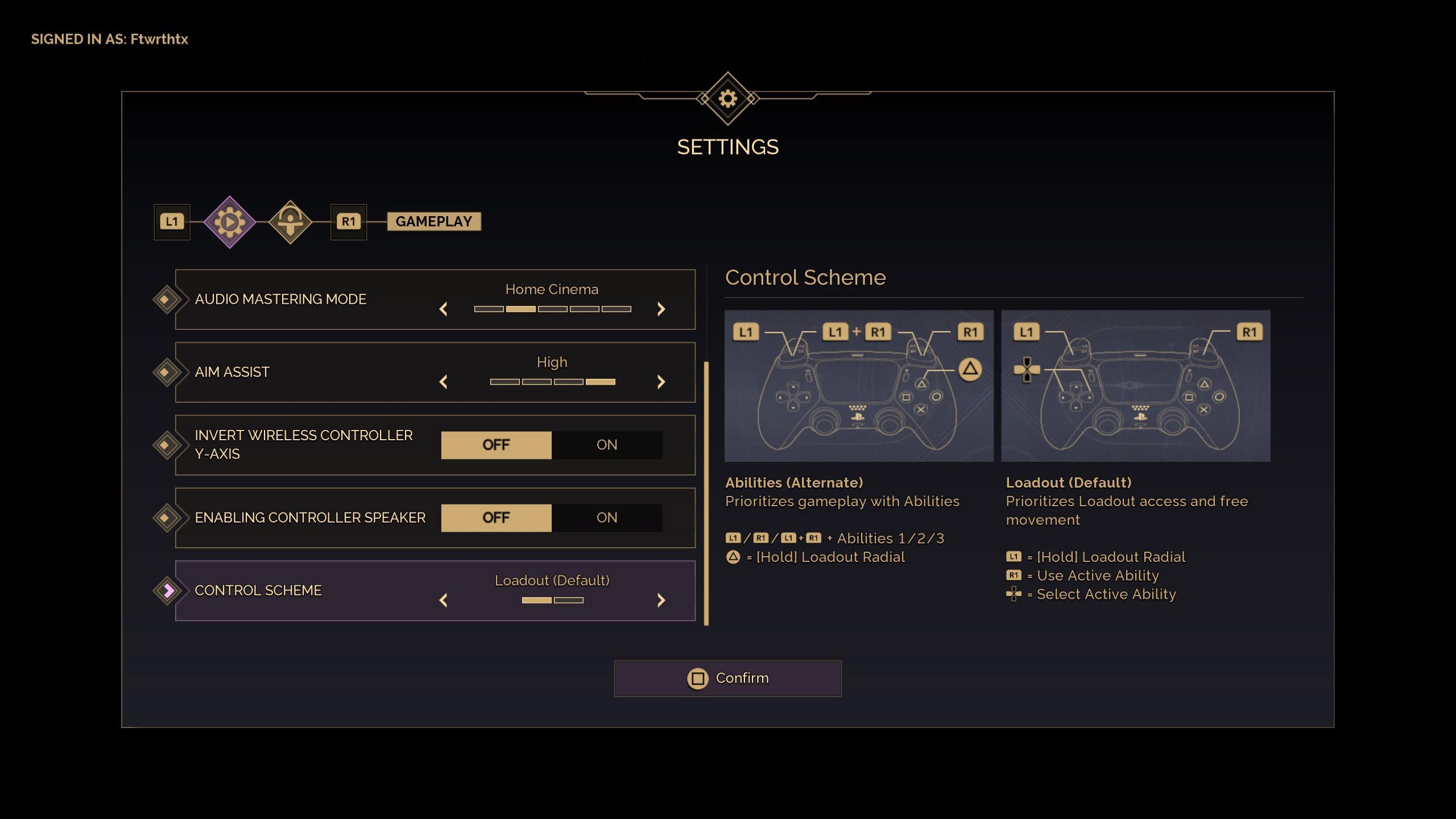
The console interface makes the menus and fabricators easier to navigate than they were at PC launch, though inventory management still asks for patience once you start hauling rare components. Crafting is the spine of the game: it is how you go from dying of thirst in a cave to running a spice operation. When the loop clicks, it is deeply satisfying. When it does not, you are staring at a list of missing parts.
World Design
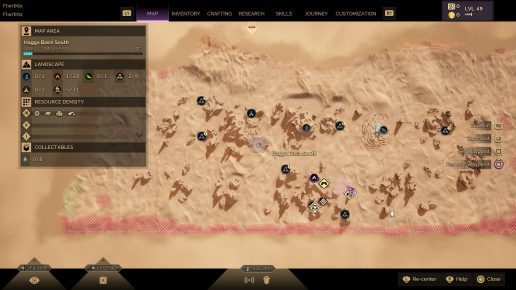
Hagga Basin is the game’s strongest argument. Rock outcrops, hidden caves, Imperial testing stations, and scattered settlements give the starting map a surprising amount of verticality and secret-hunting for a desert. The environment itself is the antagonist: heat, thirst, sandstorms, and the constant possibility of a worm appearing if you linger too long on open sand.
The Deep Desert later expands the scale and the risk, turning travel into a logistical problem as much as an exploration one. Landmarks feel earned rather than placed for convenience. The world is not endlessly varied, but it is coherent. You always know you are on Arrakis, and that knowledge changes how you plan every trip.
Character Types
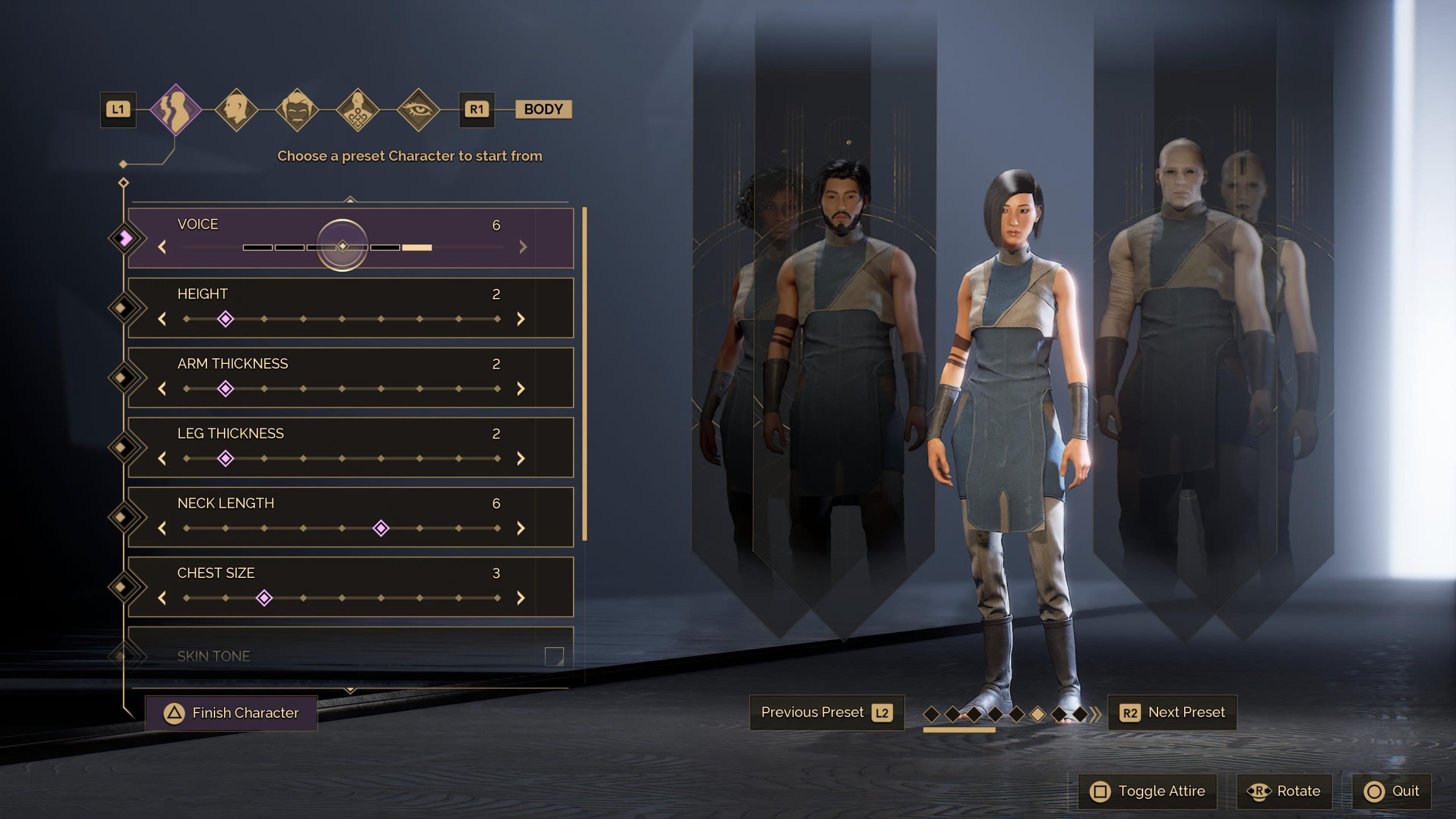
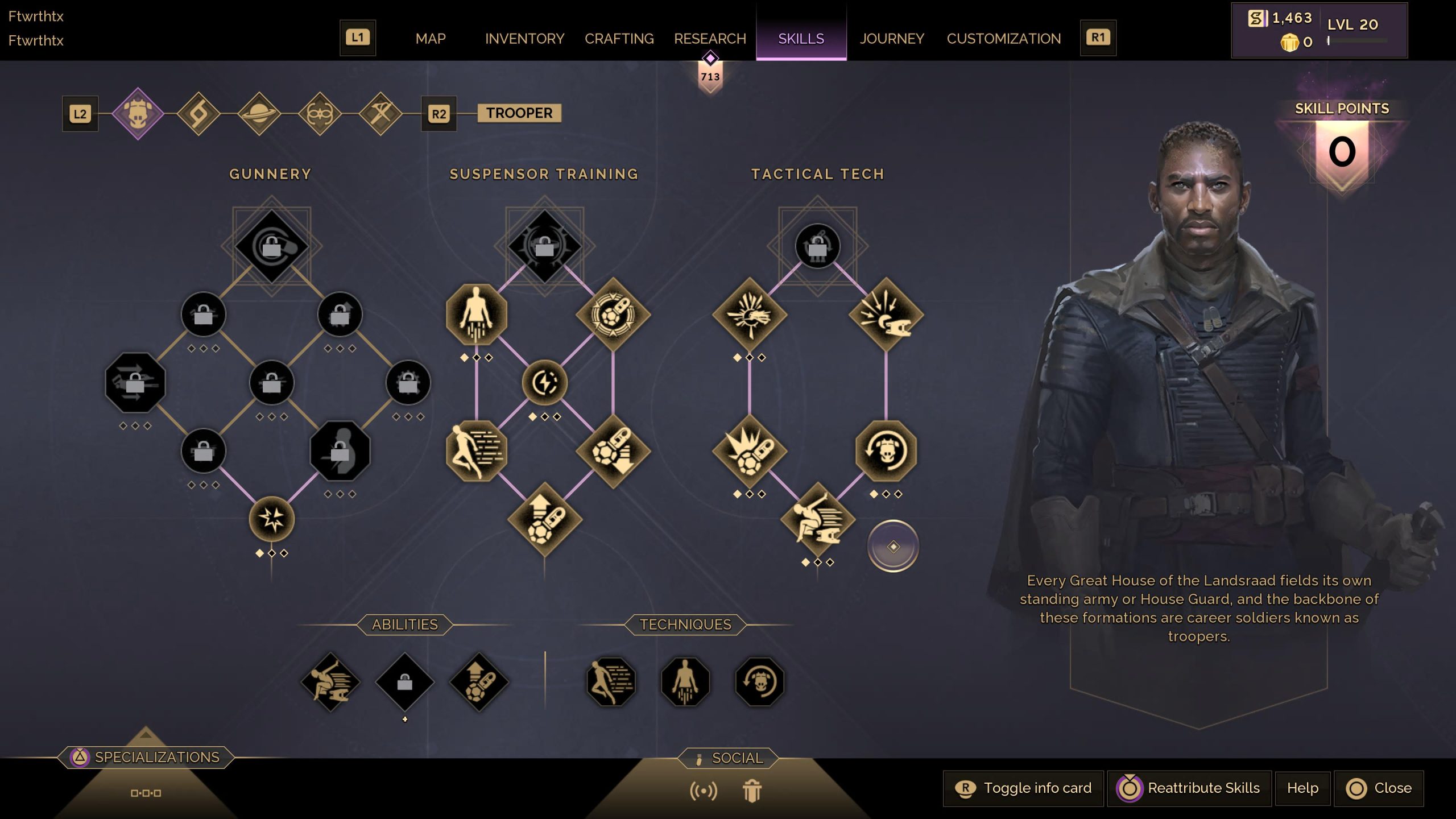
Character creation is more than a face slider. Homeworld, background, and mentor decide your first ability and how NPCs later treat you, so the same desert can feel different depending on whether you arrived as a soldier, a court product, or a Bene Gesserit plant. The four Schools of the Imperium then lock in a playstyle: Troopers lean on mobility, grenades, and dart-gun damage; Bene Gesserit use the Voice, Prana-Bindu strikes, and control; Mentats drop hunter-seekers and traps; Swordmasters live in the slow-blade dance that actually matters against Holtzman shields. Those choices stay relevant because combat, traversal, and even some story lines keep asking which school you studied.
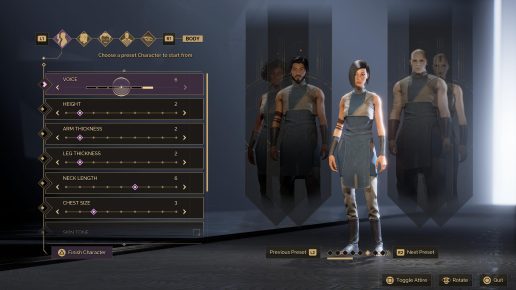
Later systems layer on top rather than replacing that identity. Specializations let you lean into combat, crafting, gathering, exploration, or sabotage, and spice use opens extra powers that fit the fantasy without turning every build into the same superhero. On PS5 the result is a character that feels authored instead of purely stat-driven, even if the schools are not equally deep. A Trooper and a Swordmaster will both survive Arrakis. They will not survive it the same way.
Gameplay
Dune: Awakening is several games stacked on top of one another. The opening hours are a classic survival crawl: water, shade, a first shelter, a first vehicle. Mid-game it becomes an RPG with faction stories, mentor abilities, and political choices. Late game it opens into large-scale PvP and resource wars, now with the option to play the entire campaign offline and tune difficulty, harvest rates, and even whether storms appear.
On PS5 the DualSense and revised UI make the systems more approachable than they were on PC at launch. Climbing, suspensors, and vehicle handling benefit from the extra feedback. The game still asks for a lot of time and attention; it is not a casual desert tourist sim. The new single-player mode is the biggest console addition, letting you experience the full story without sharing a server.
Weapons
Combat mixes dart guns, knives, and school-specific abilities in a way that tries to honor the books. Shields force you to slow your blade or use specific tools to punch through them, which creates a rhythm that feels more Dune than a standard shooter. Troopers, Bene Gesserit, Mentats, and Swordmasters each change how a fight plays out, and later weapons such as the Drillshot or Pyrocket add more options.
The weakness is variety and feel. Enemy types repeat, animations can be stiff, and gunplay rarely reaches the same level of satisfaction as the survival systems. Melee and ability use are more interesting than spraying darts, but encounters can still settle into a familiar pattern. Weapons serve the fantasy more than they redefine it.
Vehicles
Vehicles are the moment the map opens. The sandbike is your first real freedom, the buggy turns gathering into an industrial process, and the ornithopter changes the entire relationship with distance and danger. Each one has to be researched, built piece by piece, maintained, and sometimes recovered after a worm or a raid takes it.
Flying an ornithopter across the dunes while watching the sand for movement is one of the game’s best sensations. Ground vehicles feel appropriately fragile and loud. The console version benefits from haptic feedback during acceleration and landings. Vehicles are not just fast travel; they are progression milestones that rewrite how you survive.
Conclusion
Dune: Awakening on the PlayStation 5 is the most complete version of Funcom’s desert experiment so far: a survival game, an RPG, and a late-game battlefield sharing one stubborn planet. The new single-player path, console controls, and finished Book One story make Arrakis easier to enter without sanding off its hostility. Graphics modes, DualSense feedback, and a year of PC updates give the launch a stability the original PC release did not always have.
What remains is the same bargain the game has always offered. If you want to inhabit Dune rather than simply visit it, the systems are deep enough to hold you for a long time. If you want combat that matches the world-building, or a story that never pauses for cobalt and water, the seams still show. The spice is there. How much of it you extract depends on how long you are willing to stay in the sun.
9
Dune: Awakening review code provided by publisher and reviewed on a PS5. For more information on scoring, please read What our review scores really mean.